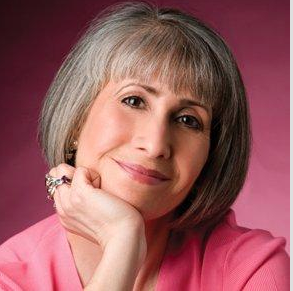

The Mother Daughter Relationship Makeover by Leslie and Lindsey Glass (Book Excerpt)

Emotional and Personality Styles
Your moms and your emotional and personality styles have impacted your relationship from the very moment you were born. What if you’re a great match, and what if you’re not? Remember, your mom’s situation when you were born as well as many other factors influenced the way she interacted and treated you. Loving, neglectful, sad, distracted, anxious, joyous? And you influenced her as well.
What were you like as a baby, child, teen, and young adult? Many babies are fussy, demanding, and unable to settle down. Happy babies make happy moms, and by the same token unhappy moms can create anxious and fearful children. Yes, even babies can be depressed. Imagine how you would feel if you spent nine months inside someone who was angry and not caring for her body the way she should be preparing for a healthy baby or taking care of herself after you were born. Many pregnant women and new moms find themselves in hard or stressful circumstances.
Unpacking Your Relationship Package
Circumstances are only one piece of your relationship puzzle. Have you ever thought about your mom’s personality traits and her moods? Are they different from yours? You may be very much alike and get along like perfect peas in a pod. But you may be different in ways that you never considered. Conflicting personality and emotional styles can cause a lifetime of drama if you don’t understand your other person and the most effective ways to communicate with her. We know plenty of families coping with difficult or depressed moms and daughters whose moods, rage, and instability make life challenging at best. Emotional and personality styles of both moms and daughters are many, and they change over time.
What we love about this part of self-discovery is that it immediately sheds light on your relationship situation. We know that with new-found clarity you will find solutions you didn’t think were possible.
Mood Matters
Before we dive into personality traits, let’s return to emotions for a moment. We talked about feelings, and feelings are one component of your emotional style or emotional inner life. Where are you with your emotions? Do you feel dead inside and struggle to feel your emotions, or are they all over the place and often out of control? Sometimes, we can hardly keep up with how many times our moods change in a day.
By the way, age and hormones play a huge role in women’s physical and mental wellbeing in our stages of development and throughout our lives. Hormones can be our worst enemy and often at the most inconvenient times, as in the teen years, around pregnancy and childbirth, when we hit our mid-forties or fifties. Hormones are a plague on many women who are already struggling to understand and manage emotions. ‘Brain on fire’ is an accurate term for the havoc hormones inflict on us just when we need stability most. Also, what are your mood habits? Do you often reset into a negative mood or are you good at staying positive? You might make a note to think about this in preparation for the journal prompts at the end of the chapter.
Personality Styles
You have a personality style; do you know what it is? In other words, do you have a strong understanding of who you are and how your behavior looks to others? When we started writing this book, Leslie thought Lindsey was the most controlling person on earth, and Lindsey thought Leslie was the most controlling person on earth. That was an astounding revelation. When we read each other’s chapters on personality, we realized that we don’t see ourselves as others see us. Same with conflict. We both thought of ourselves as conflict averse and the other as the argument-seeking party. In short, we both saw ourselves as nicer and more reasonable than we appeared to the other.
See how personalities and traits can get confusing in a dynamic like this? Sometimes it is helpful to step back and investigate further to attain more information about what’s really going on. Investigating may include asking a relative whose opinion you can trust. What am I really like? Am I being mean? Is mom controlling? These are questions you might consider asking. We rarely see ourselves the way other people see us, and we definitely don’t see ourselves when we’re in conflict and not behaving our best.
Here’s the truth. Some mothers are nicer to their pets than to their children or seem like wonderful people at work and in the world but are tyrants at home. The same goes for daughters. Some are delightful, cheerful creatures, and some can be mean as snakes to their mothers, constantly criticizing or making them feel bad. On the other side, we have pushovers, the people-pleasers, and the mothers and daughters who can’t stand up for themselves and suffer in silence.
Learning what kind of personality and emotional style you and your mother have may come as a complete surprise. But the goal is to provide clarity. Finding out that a mom who wasn’t emotional really wasn’t capable of showing much emotion because of her upbringing or personality makeup can be life changing. Or to know that a mom with no backbone was really a passive or melancholic personality might give you more compassion for them. It did for us.
First, let’s explore a few emotional styles of moms and daughters as you discover your own in this chapter. These ‘types’ are just tools to help you better understand yourself and your mom. Make notes in these charts as you read.
Leslie and Lindsey Glass are bestselling authors who have travelled their own road of healing and recovery. Owners of the popular recovery site Reachoutrecovery.com and authors of The Mother-Daughter Relationship Makeover series, Lindsey and Leslie are experienced writers, filmmakers, and humanitarians here to share their expertise on family wellness. Visit:
https://tinyurl.com/MDRMWorkbook